
Electrical safety
Safety switch keeps tripping? What to do next
Repeated power trips need an explanation, and the safest first step is knowing when to stop investigating.
The short answer
If a safety switch keeps tripping, stop repeatedly resetting it and arrange a licensed electrician’s assessment. Note what lost power and what was happening beforehand without opening equipment or recreating the fault. A shock, tingle, fire or immediate danger needs urgent help rather than routine troubleshooting.
First, recognise when to keep clear and get urgent help
If there is a fire, serious injury or immediate danger, call Triple Zero (000). Do not touch someone who is still in contact with electricity. The Queensland Government’s emergency advice treats electric shock as an emergency risk, not an ordinary loss-of-power inconvenience.
A shock or tingle from an appliance, tap or metal fitting also changes what you should do. Stay away, warn others and contact the electricity distributor immediately. For the Gold Coast, Energex’s electrical-emergency number is 13 19 62. Do not approach the switchboard to turn power off in this situation. Seek medical advice after an electric shock, even if you feel well. These steps follow the Electrical Safety Office’s shocks-and-tingles guidance.
Do not enter a wet area or approach damaged electrical equipment to gather photographs. Explaining the warning signs over the phone is more useful than putting yourself at risk to document them.
A safety switch and a circuit breaker do different jobs
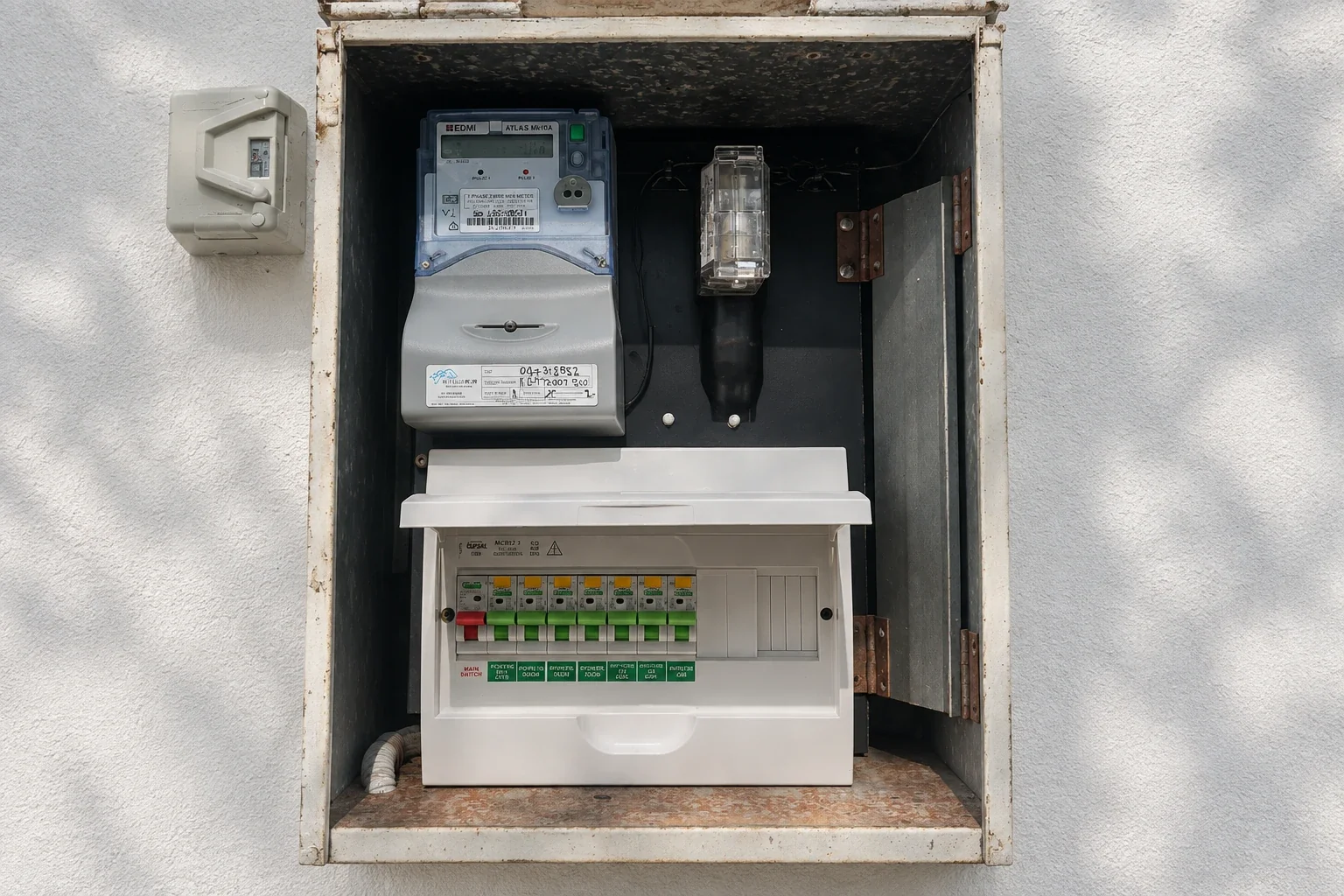
A safety switch detects current leakage and helps protect people from electric shock. A circuit breaker responds to excessive current to protect circuit wiring; some devices combine both functions. The Electrical Safety Office explains the difference.
If it is safe to look from outside a normal, intact switchboard, a button marked “T” or “TEST” can help identify a safety switch. Do not remove a cover, touch wiring or assume that every lever provides the same protection.
This distinction matters when describing the fault. “The kitchen power went off” and a photograph taken safely may be more helpful than guessing that the main switch has failed. If you cannot identify the device, say so. The electrician can establish what has operated and which circuits it protects.
What can make a safety switch trip repeatedly?
Faulty equipment, a problem in the installation or a protective device that needs assessment can be involved. An overloaded circuit may instead operate a circuit breaker. Regular trips should not simply be dismissed as nuisance behaviour: see the Electrical Safety Office’s electrical-safety-at-home advice.
| What you noticed | What to tell the electrician |
|---|---|
| A trip around appliance use | Which appliance was operating and whether the same pattern happened before. |
| A trip during wet weather | When it happened and any water ingress you noticed from a safe location. |
| An apparently random trip | Time, affected rooms and equipment that may run automatically. |
| The switch will not stay on | That it has tripped again; leave further investigation to an electrician. |
A pattern is a clue, not proof. Do not move a suspected faulty appliance to another outlet to see whether it trips that circuit too.
Useful observations you can make safely
You can help without trying to reproduce the problem. Write down what you remember before the trip, rather than switching equipment on again to create a demonstration.
- Which rooms, lights or power points stopped working?
- What was already running, and had anything just been switched on?
- Was there recent electrical work, new equipment or visible damage?
- Had the problem happened before, and at what times?
- Did it coincide with rain or another event you can describe?
- Is someone relying on powered medical equipment or another essential service?
Leave suspect equipment out of use and tell other people in the household. Do not touch a damaged plug or appliance to inspect it. If safe access is uncertain, keep clear and describe it to the electrician.
For a rental, tell the property manager or owner promptly and follow the property’s emergency-repair contact process. An immediate electrical danger still needs the urgent response described above.
Ask for fault assessment before choosing a repair
If the safety switch will not turn back on, or repeat trips have continued, tell the electrician that when booking. The Electrical Safety Office’s household guide advises seeking further electrical advice when a switch trips again.
Ask what the assessment covers, how the fault will be investigated and how any repair options will be explained before you approve work. A replacement safety switch is not automatically the answer to every trip; the cause may be elsewhere.
NDR Electrical provides electrical repairs and fault finding, with information about safety switches and RCDs available separately. Explain your suburb, symptoms and any warning signs when you contact the team. A free quote does not establish that every diagnostic visit is free, so confirm the relevant assessment charges and scope.
Keep protection working after the fault is resolved
Ask which circuits have safety-switch protection and what ongoing checks suit the installation. Having one safety switch does not mean every circuit is covered.
The Electrical Safety Office recommends regular test-button checks every three months. Routine testing of a sound installation is different from repeatedly resetting a circuit that is already faulting. Have the present problem addressed first, then follow the electrician’s and manufacturer’s guidance.
Keep any repair information and record later changes to equipment or the pattern of trips. If the problem returns, report it rather than assuming the earlier explanation applies again.
Sources checked on 19 October 2026.
Common questions
Can I keep resetting a safety switch until it stays on?
Do not use repeated resets to work around an unresolved fault, and never bypass or hold a protective device on. If it trips again or will not stay on, arrange a licensed electrician’s assessment.
Does a trip mean the safety switch is faulty?
Not necessarily. It may be operating in response to a fault elsewhere. An electrician needs to identify the device and investigate the cause before deciding whether it needs replacing.
Why does the power trip when nothing seems to be on?
Some equipment runs automatically or is easy to overlook, and the fault may involve the installation itself. Record the affected area and timing without recreating the event. A trip alone cannot identify the faulty component.
Explain the trips to the NDR team
For a non-emergency electrical fault, tell us your suburb, what lost power and what you noticed before it happened.
Discuss electrical fault findingSources and further reading
Sources checked 19 October 2026. Follow the linked guidance for current details.